President Trump released a skinny FY26 budget proposal on Friday, outlining significant cuts to key HUD programs. The proposal reduces HUD’s budget by 44 percent from $77B to $43.5B in total funding.
The majority of those cuts ($26.718B) come from a proposal to reduce and block grant Rental Assistance (Tenant-Based Rental Assistance, Public Housing, Project-Based Rental Assistance, Section 202 Housing for the Elderly, and Section 811 Housing for Persons with Disabilities). The proposal:
- Calls on states to design their rental assistance programs to ensure similar levels of recipients benefit from the block grant; and
- Institutes a two-year cap on rental assistance for able-bodied adults.
- Provides no funding for the Community Development Block Grant (CDBG), funded in FY 2025 at $3.3B;
- Provides no funding for the HOME Investment Partnerships Program, funded in FY 2025 at $1.125B;
- Consolidates the Continuum of Care and Housing Opportunities for Persons with AIDS programs into the Emergency Solutions Grant (ESG) program
- Cuts funding by $532M; and
- Caps assistance to two years.
- Removes $296M from Surplus Lead Hazard Reduction and Healthy Homes Funding;
- Removes $196M from Self-Sufficiency Programs;
- Eliminates $100M from Pathways to Removing Obstacles (PRO) Housing;
- Eliminates $60M from Fair Housing Grants; and
- Eliminates $4.025B from the Department of Energy’s Low Income Home Energy Assistance Program (LIHEAP).
The proposal increases funding for two programs:
- $1.1 billion to the Department of Veterans Affairs as a commitment to ending veterans’ homelessness; and
- $74 million into USDA Rental Assistance Grants. The Budget provides funding to renew the rental assistance grant contracts at $1.7 billion. This prevents the default of the $9 billion in USDA-underwritten multifamily housing direct loans, which depend on the rental assistance grants for debt service.
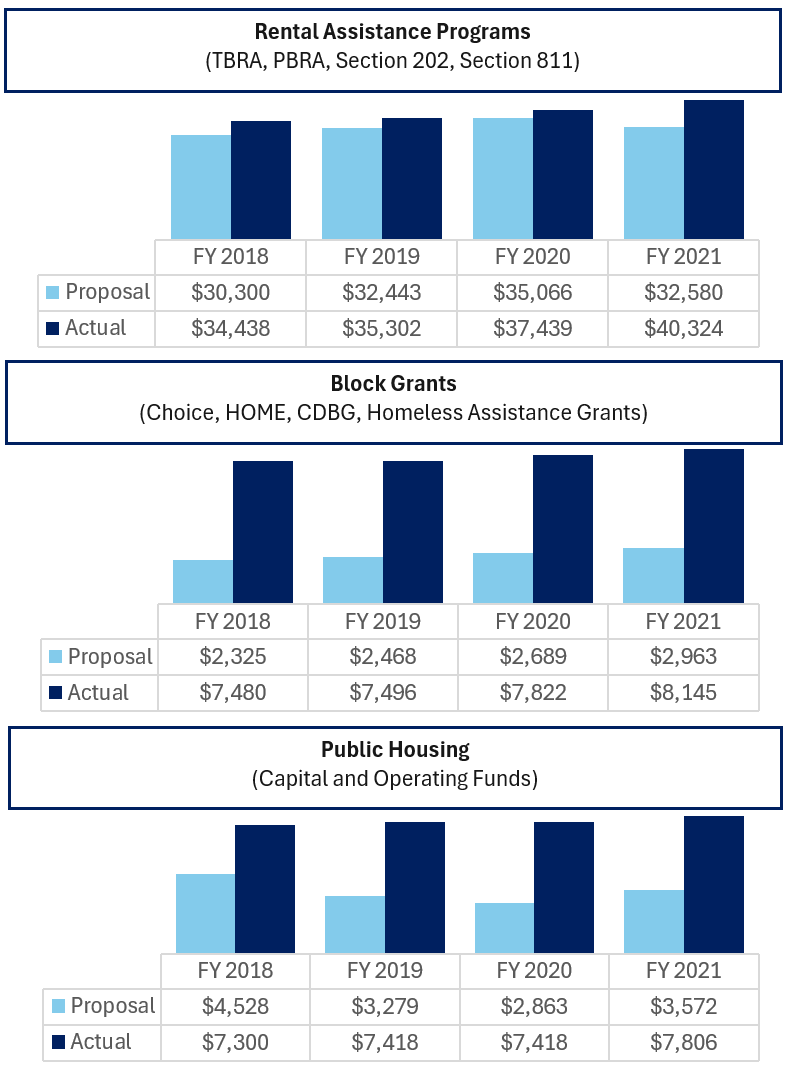
Yes, but: While these numbers are concerning, the last time President Trump was in office, he proposed similar budget cuts, and Congress maintained level funding.
What They’re Saying:
- HUD Secretary Scott Turner highlighted the “greater partnership and collaboration across levels of government by requiring states and localities to have skin in the game.”
- Senate Chair of Appropriations, Susan Collins, said she has “serious objections to the proposed freeze in our defense funding…and the proposed funding cuts to – and in some cases elimination of – programs like LIHEAP, TRIO, and those that support biomedical research.”
What You Can Do: This is just the first step in the budget process, and the House and Senate still need to release their budgets. Call your members of Congress and tell them to oppose these steep cuts, especially those to rental assistance programs.
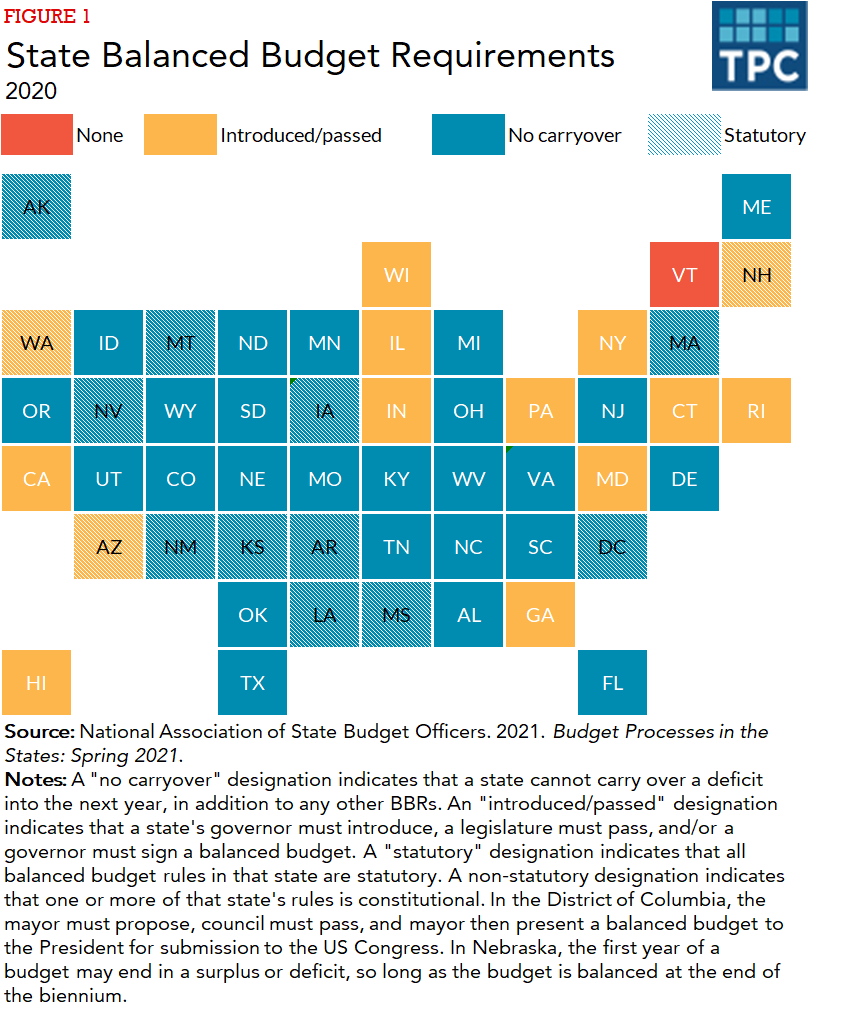
In Context: Almost every state has a balanced budget requirement. States face major budget challenges as Congress considers the federal-state Medicaid split changes. As with Medicaid, shifting rental assistance responsibility to the states will likely mean that significantly fewer people receive assistance.